Political essay
Pahlavism — Liberation or Obedience?
Pahlavism as the liberation of Iran’s people and resources: strong, free individuals united around Crown Prince Reza Pahlavi by a national pact to build a secular, democratic and modern Iran.
English article
Revised and expanded 20 November 2026. First published 19 November 2026.
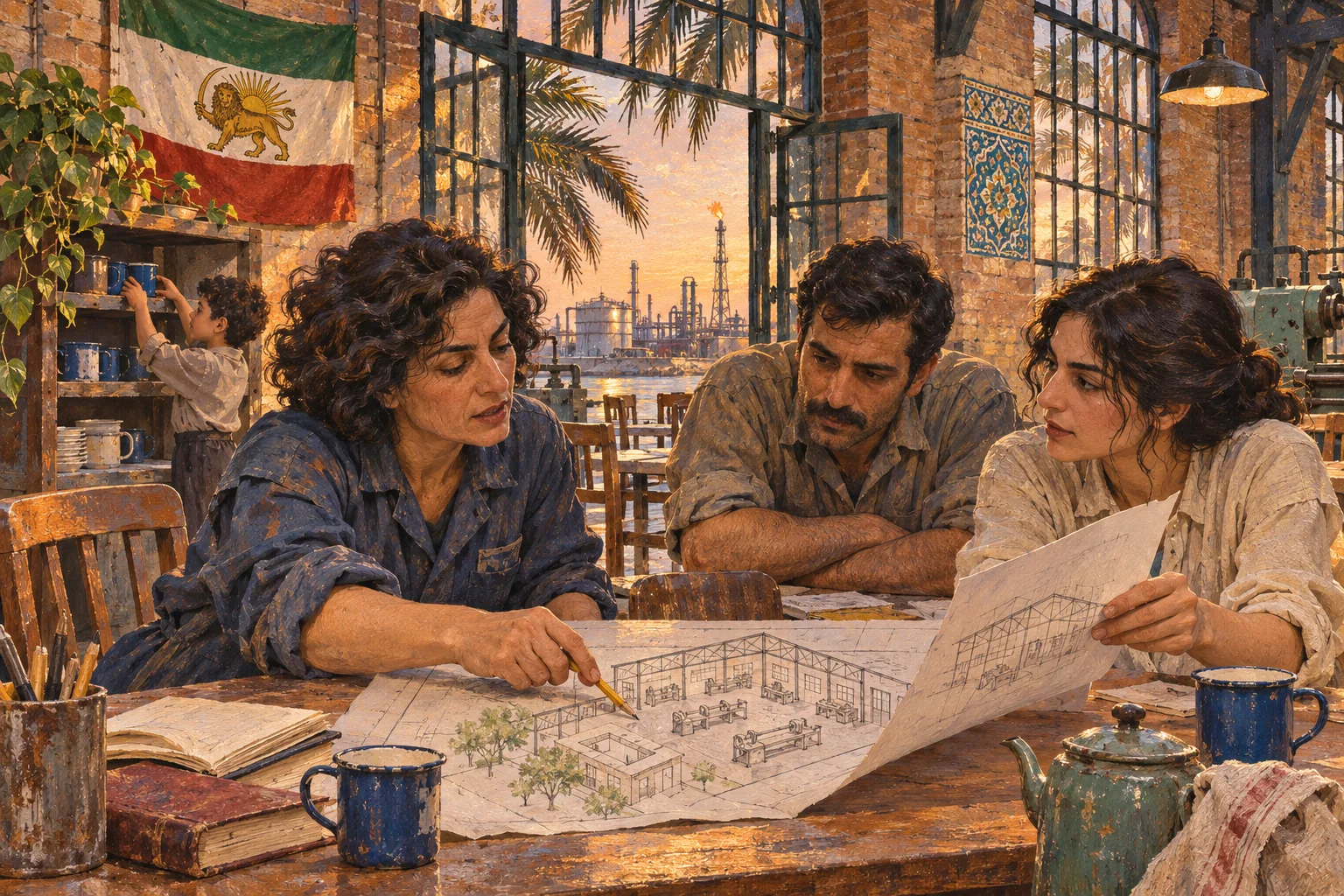
For me, the answer is clear: liberation. Pahlavism, as I understand and support it, means the liberation of Iran’s resources and the release of its people’s capacity to build. It means a secular, democratic, productive country in which intelligence, education, effort and imagination can shape the future. It means an Iran able to live with dignity, confidence, friendship and love among the peoples of this planet.
This movement has a centre of unity in Crown Prince Reza Pahlavi. I support that centre because I want our scattered strengths to come together. The people gathering around it should arrive with their judgement, initiative and independence intact. We have a country to rebuild, and that work needs people who can think, decide and act.
The national unity I seek is a pact among strong, free individuals. We agree on a destination and accept responsibility for reaching it together. That is the essence of my Pahlavism. Unity must give people the confidence to take responsibility. It must never become a habit of waiting for an order before offering what they already know how to do.
I was born in Abadan, experienced revolution and war, and left Iran in 1998. I have learned and worked in different countries, and today I practise as a trauma surgeon in Leeds. When I think about what I could bring to Iran, I think of the knowledge, judgement and experience acquired along that journey. There are so many of us with something to offer. Our country needs the full strength of those lives.
Release the resources of a whole nation
When I speak of resources, I mean everything that allows a nation to flourish. Iran’s natural wealth matters: its land, energy, minerals, sunlight, water and geographical position. But resources acquire value through knowledge, sound management and productive work. A country cannot live well simply by naming what lies beneath its soil.
Our greatest national capacity lives in people. It is the scientist’s intelligence, the engineer’s precision, the worker’s skill, the entrepreneur’s willingness to invest, the teacher’s patience and the artist’s imagination. It is also the parent’s care, the young person’s ambition and the older generation’s experience. The spirit of Iran lives through all of them.
In my earlier article, Liberation of the Resources, I described the barriers that prevent these abilities from meeting the needs of the country. Removing those barriers is the purpose of political change. Education should lead to opportunity. Effort should have a fair chance of success. Talent should be able to develop without permission from an ideological gatekeeper.
This is why I understand our struggle as a revolution in the full sense of the word. Its achievement should be visible in daily life: a young woman choosing her future, a researcher pursuing an honest question, a family living securely, a business creating useful work. We must make the country capable of receiving what its people can give.
The free individual is the foundation
People cannot release their abilities while being trained to doubt their right to use them. If every initiative requires approval from a political circle, capable people eventually stop offering ideas. They wait, withdraw or find somewhere else to build. We cannot afford to reproduce that habit inside a movement for liberation.
I want educated Iranians to bring their full minds into the national effort. I want a nurse to identify a practical problem and propose an answer. I want an engineer to challenge a weak design. I want a student to ask the question that the rest of us have overlooked. Their contribution becomes valuable precisely because they see something that somebody else does not.
Confidence also requires room to learn. A person should be able to revise an idea without being humiliated, admit an error without being expelled and disagree without having their patriotism put on trial. Serious people become better through honest discussion and useful criticism.
Independence carries obligations. We owe one another competence, honesty and respect for agreed work. We must be willing to listen as well as speak. Freedom makes us responsible for what we choose to do, and that responsibility is the beginning of mature citizenship.
A centre of unity that gives people confidence
I support Crown Prince Reza Pahlavi because I see a recognisable centre around which Iranians can gather for national reconstruction. The Pahlavi name, in my understanding, carries the promise of modernisation, national confidence, secular government and a country engaged with the world. My support is directed towards making that promise meaningful in the lives of ordinary people.
A shared centre helps people who have different experiences and opinions work towards the same future. It gives continuity to a national effort and a common point of reference when disagreement would otherwise scatter us. Its strength grows as the people around it become more capable, more trustworthy and more willing to take responsibility.
The Crown Prince cannot personally design every school, repair every institution or organise every professional contribution. Nor should the national movement wait for him to do so. Our duty as supporters is to bring prepared minds and useful work to the common endeavour. Leadership should give our capacities a shared direction.
I want the Lion and Sun movement to be a place where an Iranian can say: I have knowledge, experience or energy to offer, and there is room for me here. The wider that circle becomes, the more credible our promise of national renewal becomes.
Chosen discipline makes cooperation possible
Freedom and organisation belong together. A society of capable people still needs agreed priorities, clear responsibilities and dependable decisions. Without these, even generous intentions can dissolve into repeated meetings, personal rivalry and unfinished work.
As a surgeon, I understand the value of coordinated responsibility. A team needs a plan, clear roles and people who perform their tasks well. It also needs members who speak when they see a problem. Expertise is useful when it can influence the work. National reconstruction will require the same respect for competence, with democratic institutions governing public decisions.
The discipline I ask for begins with an agreement freely made. If I accept a task, I should complete it or explain honestly why I cannot. If we appoint a coordinator for a defined project, we should give that person the authority needed to organise it. Their decisions must remain open to review, and their authority must remain tied to the responsibility entrusted to them.
We should be clear about what has been agreed, who is accountable and how progress will be assessed. That allows independent people to trust one another. It also removes the endless uncertainty in which personal access becomes more influential than competence.
Our pact must have a constitutional foundation
The national pact I have in mind begins with a united Iran, equal citizenship, secular government, individual liberty and authority constrained by law. These commitments should govern how we work together now and the institutions we hope to build.
My preference is a democratic constitutional monarchy. I see value in a crown that represents national continuity while elected institutions carry the responsibility of government. Parliament, courts, public administration and a free press must each be able to fulfil their proper roles. The constitutional choice must belong to the Iranian people through a free and credible democratic process.
Secularism makes common citizenship possible across differences of belief. A person’s faith, or absence of faith, should neither grant political privilege nor diminish their rights. Women and men must stand equally before the law. People should be free to think, study, create and speak without having their lives judged against a compulsory religious doctrine.
These principles also give cooperation a durable foundation. A republican engineer can work with a constitutional monarchist doctor. A religious citizen can defend secular institutions alongside a non-believer. They can agree to build a functioning country while retaining their own convictions. Our pact protects the freedom that makes their contribution worth having.
Put modern knowledge and technology to work
Modernism must become practical. I want Iran to use the best knowledge and technology available, and I want Iranian ability to help create what comes next. That requires open education, honest research and institutions that judge an idea by its merit.
I propose developing voluntary professional networks around clearly defined needs: water, energy, healthcare, education, housing, transport and productive industry. A team should begin with a problem it understands, examine evidence, prepare a realistic proposal and make its work available for informed scrutiny. Engineers, researchers, managers and the people who use a service should all have a place in that process.
Digital tools could help specialists work together across distances. Artificial intelligence could support translation, learning, the organisation of knowledge and the examination of complex information, with responsible people checking its outputs. Open teaching materials and remote mentoring could connect experienced professionals with students. Modern manufacturing and carefully assessed energy and water technologies could support a more productive economy.
Technology should also make public work easier to examine. Clear budgets, accessible records and published project results can help citizens see what has been promised and delivered. These are proposals for how we could work; their value will depend on competent implementation. A modern country needs people who understand its tools and institutions that earn the public’s trust.
Bring our people together and open Iran to friendship
I know what it means to carry Iran with me while living elsewhere. Education, work, languages and life in different societies have strengthened my desire to contribute to the country from which I came. Many Iranians share that experience. What we have learned can become part of Iran’s future.
Our colleagues inside Iran possess knowledge that distance cannot replace. They understand the everyday conditions, local institutions, practical obstacles and needs of their communities. Those abroad can offer additional skills, professional relationships, investment and experience of other systems. Partnership becomes productive when each side respects what the other knows.
Participation should take many forms. Some people may return. Others may teach, mentor, invest, collaborate in research or help establish professional links while remaining where they live. We should make useful contribution possible without demanding a single model of belonging.
The same confidence should guide Iran’s relationship with the world. I want friendship with the Israeli people, our neighbours, Europe, the Americas and the peoples of every continent. I want Iranian children to grow up knowing that scientific exchange, travel, trade, culture and ordinary human affection can connect them to others. Love of Iran should give us the confidence to approach humanity with generosity. Our national interest is served by peace, mutual respect and fruitful cooperation.
Let our unity be measured by what we build
The test of our movement must be practical. Have we brought a capable person into useful work? Have we helped a student learn, prepared a credible project, raised resources responsibly or repaired a division that was wasting our strength? Have we kept our promises?
I respect commitment expressed in words and symbols. I also want that commitment to leave something behind: knowledge shared, a task completed, a relationship strengthened, a plan ready to use. People should be able to see the benefit of the time and trust they have invested in us.
This is what I ask of myself and of fellow supporters of Crown Prince Reza Pahlavi. Let us become dependable partners in a national endeavour. Let us welcome initiative, organise it well and hold ourselves accountable for the results. A person who joins our effort should leave more confident in their ability to help Iran.
Pahlavism, in my understanding, gathers free people around the work of liberation. We bring our minds, our abilities, our experience and our love of the country into a shared pact. We choose to stand together because we believe that together we can build a secular, democratic, modern and prosperous Iran.
That is the unity I want. That is the responsibility I accept. And that is the Iran I want us to build.
Earlier writing by the author
This revised edition develops the ideas in my earlier writing, including the manuscripts held in my Google Drive archive and the articles published on my homepage.
- Liberation of the Resources (10 November 2026).
- National Cohesion (10 November 2026).
- Pragmatic Pahlavism and Constitutional Monarchy (June 2026; author’s archive).
- Pahlavism and Political Pragmatism (author’s archive).
First published 19 November 2026. Revised and expanded 20 November 2026.